


Fat gain vs. weight gain: Here’s what you need to know
Let’s start with this: weight gain and fat gain are not the same thing.
If you woke up this morning and your scale was 3, 5, even 7 pounds higher than yesterday, I promise you didn’t gain that much fat in your sleep.
🎓Here’s the science: it takes about 3,500 surplus calories to gain one pound of fat. So unless you ate 17,500 calories on top of your normal intake yesterday (and if you did, I hope it was an epic buffet), this is not fat gain.
So what IS it then?
It’s likely one or more of these very normal, very human things:
- More food volume still in your system (aka… you just haven’t pooped yet) 💩
- A salty meal or dehydration (note, it is OK to eat a salty meal) 🧂
- Hormonal shifts (especially around your period) 🩸
- Less sleep or higher stress 😴
- You haven’t had enough water 💧
Your body isn’t “off track” or “doing ya dirty”. It’s just… being a body.
The scale isn’t evil, but it IS misunderstood
Tracking your weight can be helpful, but only when you understand that fluctuations are normal. In my BPM Coaching, my team and I teach our clients to monitor weight ranges (not one fixed number) so the daily ups and downs don’t create mental spirals.
Example: your range can be 177-183 pounds.
Rather than: “my weight is 180 on the dot”. This isn’t realistic for the way our body actually works, it will fluctuate! 😉
If we hyperfixate on the number 180 and you see it at 180.5 – you spiral.
IF we focus on a range of 177-183 (or whatever your range might be) and you see it fluctuate throughout the week, you think “cool I’m in my weight range” and you move on.
What is WAY more important than the number on a scale yesterday compared to today?
▶️✅your waist measurements, progress pics, and number on the scale over a few weeks to MONTHS!
Because that number on the scale alone never tells the full story.
If you’re reverse dieting… fluctuations are even more normal
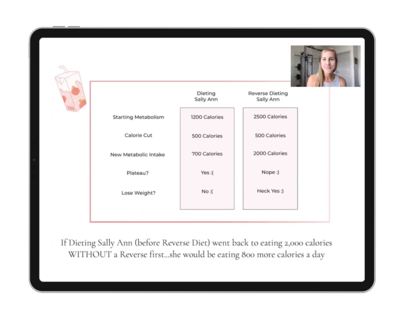
If you’re someone who has been stuck eating 1,200 calories forever, then yes — you might notice weight fluctuations in the process as your body is getting more fuel and you are building more muscle. And again, fluctuations ARE normal.
In fact, reverse dieting is designed to bring your metabolism back to a healthy set point, which sets you up for actual long-term fat loss.
Read that again. Fat loss becomes easier when your metabolism is working with you.
Note: IF you are doing a reverse diet and see MASS weight gain, you might just be in a calorie surplus. You can learn more on that topic here.
You don’t need to fear food (or the scale)
One of the best tools we use with our clients is macro tracking. Not forever. But to know exactly what your body needs, so you can get out of the restrict-binge cycle, stop fearing weight gain, and finally feel confident knowing your metabolism is healing.
When you know you didn’t eat 8,000+ extra calories yesterday, you can laugh at the scale and move on with your day. Or at least…not spiral.
Still feeling nervous about starting a reverse diet?
You’re not alone.
Most of the women we work with have said, “I’ve tried every diet under the sun”. And they’re terrified of gaining weight if they start eating more. But we’ve helped hundreds of women go from 1,200 calories to 2,000+ without regaining fat.
Check out this podcast episode: Will You Gain Weight During A Reverse Diet?
You can also listen to: Overcoming the Mental Struggle of Eating More Calories During a Reverse Diet
TL;DR?
- Scale fluctuations are normal
- Weight gain is not always fat gain
- Reverse dieting helps your metabolism work better
- Tracking macros gives you peace of mind
If your goal is sustainable fat loss without obsessing over every calorie or cutting out your favorite foods, your next best step might not be another diet… it might be a reverse.P.S. Want a simple starting point? Grab my Free Heal Your Metabolism Starter Kit and start rebuilding your metabolism today.